Topics

Help teams explore data without compromising privacy.
Help teams explore data without compromising privacy.
How Automation Recovers Millions in Truck Waiting-Time Losses

Published
4 min read
Topics:
Use Case

Table of Contents
In 2023, nearly 40% of driver stops involved detention (billable waiting time) — delays longer than two hours, according to the American Transportation Research Institute. Those numbers climbed even higher for women drivers and for those hauling in the spot market versus contract freight.
Every one of those hours matters. When trucks sit idle, drivers lose income, dispatchers lose visibility, and fleets lose the chance to bill for time that should be paid. Across the industry, carriers collect on less than half of all eligible detention hours, leaving millions of dollars unclaimed every year.
This issue can be easily solved with automation.
The Problem: Missed Revenue from Unbilled Waiting Hours
Example. A fleet running 1,200 trucks and handling over 194,700 loads a year looks efficient on the surface. Trucks are moving, freight is delivered, and operations stay busy. But underneath that momentum lies a silent drain on revenue: time lost at the dock.
Across the network, about 39% of stops run past their appointment window. Around 10% stretch beyond the standard two-hour “free” time, turning into billable detention. Yet, only 40% of those billable events ever make it to an invoice.
That gap adds up fast.
The root cause isn’t lack of effort, it’s the manual grind. Dispatchers juggle data from ELDs, GPS systems, driver messages, and spreadsheets, trying to spot delays before the billing window closes. Each delay must be proven with timestamps and reported to shippers or brokers within strict timeframes. Miss the moment, and the opportunity to bill disappears permanently.
The Financial Impact
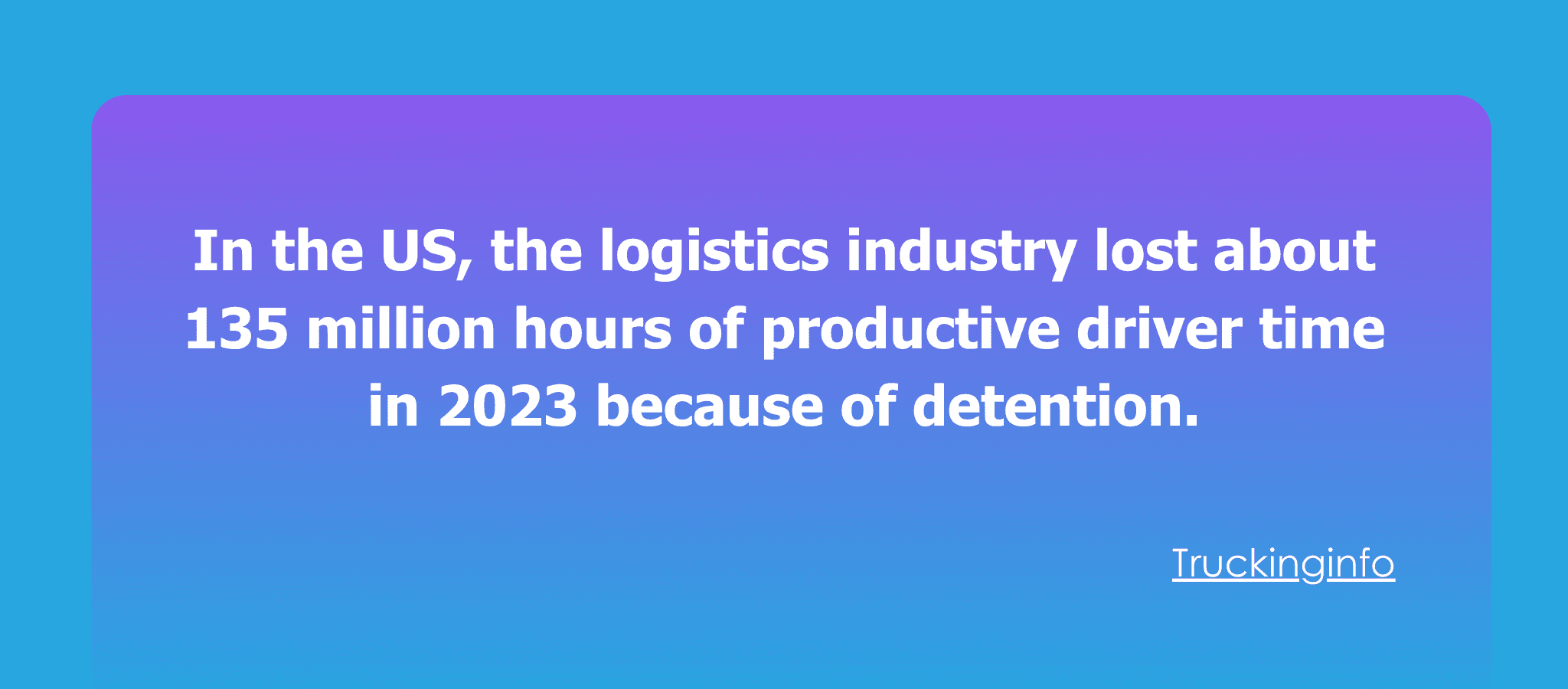
Industry-wide, detention is costing billions. The U.S. sector lost an estimated 135 million driver hours in 2023 due to detention — translating into roughly $3.6 billion in direct costs and $11.5 billion in lost productivity.
With detention rates typically ranging from $50 to $100 per hour, it’s clear how much value is being left on the table. For the 1,200-truck fleet, those missed hours add up to over $4.9 million a year in lost detention revenue.
The Solution: What Automation Can Do with Chata.ai
Automation can transform how fleets stay on top of billable waiting time. Instead of relying on dispatchers to manually track dwell time across systems, Chata.ai can automatically monitor every load in real time and send instant alerts when a truck crosses or reaches the two-hour threshold.
This proactive visibility means dispatchers can act fast: collect proof, notify shippers or brokers, and start the billing process before the opportunity slips away. Chata.ai connects to existing ELD, GPS, and TMS data, so alerts are accurate, timely, and require no extra work from the team.
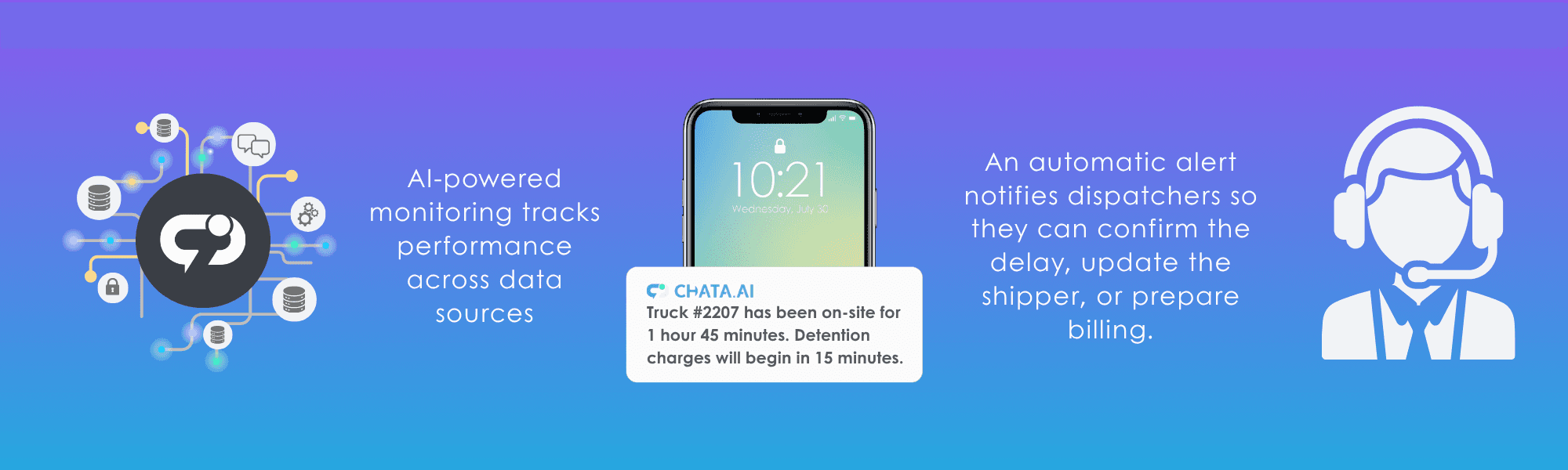
For a fleet running 1,200 trucks, implementing automated waiting time tracking and billing triggers, could shift from 40% billing compliance to 75%, resulting in:
💸 $4,938,360 in additional detention revenue captured annually
📅 That’s over $410,000 per month in revenue currently leaking out
Beyond the financial gain, Chata.ai’s automation can reduce dispatcher stress and ensure drivers’ time is properly valued.
Key benefits of Chata.ai include:
Real-time monitoring of all loads across the fleet
Instant alerts when detention thresholds are reached
Integration with ELD, GPS, and TMS systems
Reduced dispatcher workload and less manual tracking
Improved billing compliance, helping fleets recover unbilled detention revenue
Ensures driver time is properly valued
By surfacing delays the moment they happen, Chata.ai lets fleets focus on operations while capturing revenue that would otherwise be lost.
Why Automation Changes Everything
Trucking will always have waiting time. But with automation, that waiting doesn’t have to mean lost revenue.
Drivers get credited for every minute they wait.
Dispatchers spend less time chasing data and more time managing freight.
Finance teams gain confidence that every eligible detention hour is billed correctly and on time.
For fleets willing to digitize the details, detention time can finally become what it should be: paid time.
Topics
Help teams explore data without compromising privacy.
How Automation Recovers Millions in Truck Waiting-Time Losses
Published
4 min read
Topics:
Use Case
Table of Contents
In 2023, nearly 40% of driver stops involved detention (billable waiting time) — delays longer than two hours, according to the American Transportation Research Institute. Those numbers climbed even higher for women drivers and for those hauling in the spot market versus contract freight.
Every one of those hours matters. When trucks sit idle, drivers lose income, dispatchers lose visibility, and fleets lose the chance to bill for time that should be paid. Across the industry, carriers collect on less than half of all eligible detention hours, leaving millions of dollars unclaimed every year.
This issue can be easily solved with automation.
The Problem: Missed Revenue from Unbilled Waiting Hours
Example. A fleet running 1,200 trucks and handling over 194,700 loads a year looks efficient on the surface. Trucks are moving, freight is delivered, and operations stay busy. But underneath that momentum lies a silent drain on revenue: time lost at the dock.
Across the network, about 39% of stops run past their appointment window. Around 10% stretch beyond the standard two-hour “free” time, turning into billable detention. Yet, only 40% of those billable events ever make it to an invoice.
That gap adds up fast.
The root cause isn’t lack of effort, it’s the manual grind. Dispatchers juggle data from ELDs, GPS systems, driver messages, and spreadsheets, trying to spot delays before the billing window closes. Each delay must be proven with timestamps and reported to shippers or brokers within strict timeframes. Miss the moment, and the opportunity to bill disappears permanently.
The Financial Impact
Industry-wide, detention is costing billions. The U.S. sector lost an estimated 135 million driver hours in 2023 due to detention — translating into roughly $3.6 billion in direct costs and $11.5 billion in lost productivity.
With detention rates typically ranging from $50 to $100 per hour, it’s clear how much value is being left on the table. For the 1,200-truck fleet, those missed hours add up to over $4.9 million a year in lost detention revenue.
The Solution: What Automation Can Do with Chata.ai
Automation can transform how fleets stay on top of billable waiting time. Instead of relying on dispatchers to manually track dwell time across systems, Chata.ai can automatically monitor every load in real time and send instant alerts when a truck crosses or reaches the two-hour threshold.
This proactive visibility means dispatchers can act fast: collect proof, notify shippers or brokers, and start the billing process before the opportunity slips away. Chata.ai connects to existing ELD, GPS, and TMS data, so alerts are accurate, timely, and require no extra work from the team.
For a fleet running 1,200 trucks, implementing automated waiting time tracking and billing triggers, could shift from 40% billing compliance to 75%, resulting in:
💸 $4,938,360 in additional detention revenue captured annually
📅 That’s over $410,000 per month in revenue currently leaking out
Beyond the financial gain, Chata.ai’s automation can reduce dispatcher stress and ensure drivers’ time is properly valued.
Key benefits of Chata.ai include:
Real-time monitoring of all loads across the fleet
Instant alerts when detention thresholds are reached
Integration with ELD, GPS, and TMS systems
Reduced dispatcher workload and less manual tracking
Improved billing compliance, helping fleets recover unbilled detention revenue
Ensures driver time is properly valued
By surfacing delays the moment they happen, Chata.ai lets fleets focus on operations while capturing revenue that would otherwise be lost.
Why Automation Changes Everything
Trucking will always have waiting time. But with automation, that waiting doesn’t have to mean lost revenue.
Drivers get credited for every minute they wait.
Dispatchers spend less time chasing data and more time managing freight.
Finance teams gain confidence that every eligible detention hour is billed correctly and on time.
For fleets willing to digitize the details, detention time can finally become what it should be: paid time.
More Updates