Topics

Help teams explore data without compromising privacy.
Help teams explore data without compromising privacy.
Self-Service Analytics Platform: 8 Questions to Ask Before Buying

Published
5 min read
Topics:
Self-Service Analytics

Table of Contents
Sit through enough vendor demos for self-service analytics platforms and you'll notice they all promise the same things: ask questions in plain language, build dashboards in minutes, use AI to do the heavy lifting, and free your business users from waiting on an analyst.
The differences show up later, after the contract is signed and the platform meets your actual data.
Does the tool work across the systems you already run, or does it need everything piped into one place first? When someone gets a number back, can they tell where it came from? Does it fit the way your security team already thinks about data? What happens to your bill once a few thousand people start asking it questions every day?
This article walks through eight things worth checking before you choose a self-service analytics platform.
TL;DR: The best self-service analytics platforms do more than let business users ask questions in plain language. They make analytics genuinely accessible while keeping answers trustworthy, protecting sensitive data, surfacing insights before anyone asks, controlling cost as usage grows, and meeting enterprise security requirements. Before you buy, evaluate natural-language analytics, answer transparency, data privacy, auditability, scalability and total cost of ownership, adoption, enterprise security, and implementation.
1. Does the self-service platform protect sensitive data during processing?
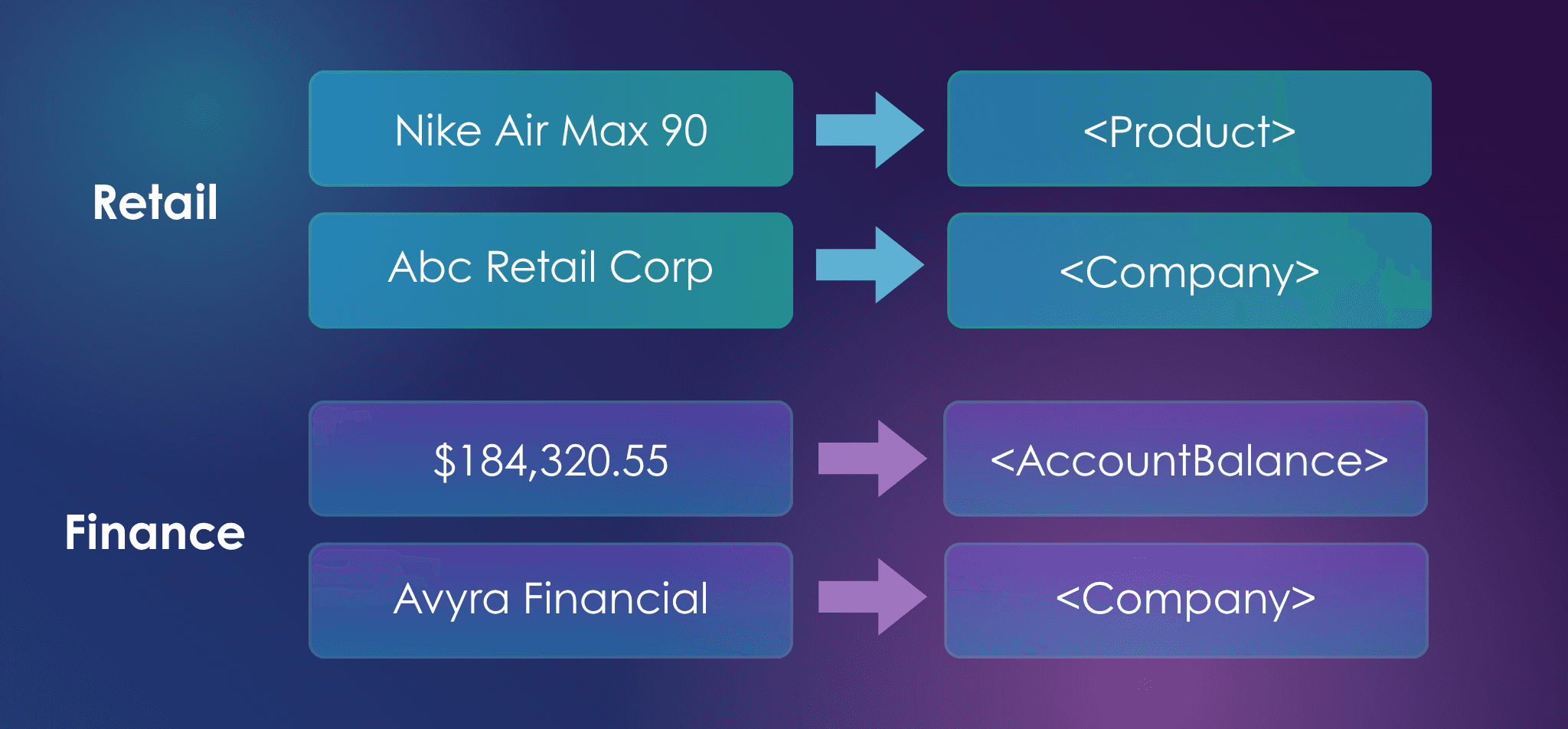
Some platforms send raw data values to external language model APIs as part of interpreting a natural-language query, passing actual customer records, financial figures, or other sensitive fields to a third-party service just to figure out what the user is asking. That creates real exposure: the data leaves your governed environment; it may be logged or retained by the external provider, and it's subject to that provider's own security and data-handling practices rather than yours. For regulated industries or anything covered by data residency requirements, that alone can rule a platform out, regardless of how good its natural-language capabilities are otherwise.
Before you buy, understand exactly what happens to sensitive information once it enters the analytics pipeline, and what safeguards are actually in place. Self-service analytics platforms shouldn't require organizations to expose sensitive business information unnecessarily just to let employees ask questions in plain language.
Things worth checking:
Does the AI need to see sensitive field values in order to interpret a question?
Is sensitive data masked before it reaches any external model?
What data, if any, leaves the organization's environment during a query?
Where does the actual query processing happen?
How Chata.ai handles this: Chata.ai includes a proprietary privacy obfuscation layer that masks sensitive data values before they reach any language model. Query processing happens locally, not through an external AI service. Organizations in regulated industries can run natural-language analytics without exposing sensitive business data to third-party infrastructure.
2. Can Users Trust Where Answers Come From?
Enterprise analytics needs more than an answer. Users need enough context to understand what that answer represents, where the data came from, and how the result was produced. When a dashboard shows an unexpected number, the first question in any organization is "is this right?" A platform that can't answer that question efficiently creates more distrust than it removes.
Look for transparency across the full path from question to result:
Is the generated query visible and reviewable?
Is there an audit trail showing who asked what and when?
One practical way to evaluate this is to ask the vendor exactly what happens between a user's question and the final number on screen. Some platforms use a single model to go directly from natural language to a database query, with no visibility into intermediate steps. Others break the pipeline into distinct stages, each of which can be inspected.
That distinction matters most when a result looks wrong and someone needs to find out why. An auditable pipeline, where every transformation step is visible, is a meaningful difference from a system where the answer arrives but the path to it is opaque.
How Chata.ai handles this: Chata.ai uses a pipeline with distinct, inspectable stages. We built our technology in a way where it never queries your database directly. Instead, your request is understood, turned into a query, and processed within your environment. Every step is visible, so when a result looks off, there's a clear path to finding out why.
Enterprises evaluating analytics platforms should ask whether users can see the generated query, trace results to their source data, and inspect the logic used to produce an answer. Platforms with auditable, step-by-step pipelines give teams the ability to verify results rather than simply accept them. This becomes especially important in regulated industries where data traceability is a compliance requirement, not a preference.

3. Does the Platform Support Natural Language Analytics Beyond Simple Queries?
The presence of natural-language querying and its actual depth are two very different things. Most implementations handle only a narrow slice of the analytical workflow. A useful platform should let business users ask questions, explore naturally, ask follow-ups, generate visualizations, and combine both: conversational language and results you can trust.
The question worth asking isn't "does it support natural language?" it's "how much of the analytical workflow can a business user complete through natural language?". A platform that handles the first question well but pushes users back to IT for anything complex isn't genuinely self-service. The goal is a complete analytical workflow.
Evaluate whether the platform handles:
Query suggestions that help users discover what they can ask
Chart and dashboard generation from natural-language requests
Follow-up questions with context
Filtering and exploring results
Complex questions gracefully rather than failing silently
How Chata.ai handles this: Chata.ai supports a full conversational workflow — follow-up questions, visualization generation, query suggestions, and result exploration, all in plain language. Business users can move from question to chart to follow-up without switching interfaces or involving a technical team.
4. Is the Self-Service Platform Cost-Efficient and Scalable?
A platform that performs well for 20 users can behave very differently with thousands of users and millions of queries per month. Performance and economics need to be evaluated together, not separately.
On economics, the more important questions are:
What infrastructure does the platform require, and does that scale proportionally with usage?
What are the expected total costs at 10,000, 100,000, and 1 million queries per month?
AI inference infrastructure deserves specific attention. Platforms that route every query through large external language model APIs accumulate significant costs as usage grows.
How Chata.ai handles this: Chata.ai's engine runs predominantly on standard central processing units (CPU) infrastructure, which keeps computing costs low even as usage grows. By executing on CPU, the platform reduces infrastructure costs and lowers the barriers to scaling enterprise data operations. That means enhanced ROI as you scale your data monetization projects, without sacrificing performance.
5. Can the Platform Move From Reactive to Proactive?
Most analytics platforms are reactive by design. A user opens a dashboard, checks a number, notices something looks off, and starts investigating. That workflow depends entirely on someone knowing to look. What happens to the KPI that moves overnight when nobody has the dashboard open?
More capable platforms can monitor important metrics continuously and surface relevant changes to users before they ask.
Evaluate whether a platform can:
Let business users configure their own monitoring conditions in natural language
Monitor defined KPIs and thresholds automatically
Deliver context, not just a raw number
Reactive self-service | Proactive self-service |
User opens dashboard | Platform monitors KPIs continuously |
User notices a change | Platform detects the change |
User investigates manually | Platform provides context with the alert |
User shares the finding | The right person receives the insight |
Action starts after discovery | Action starts immediately |
The operational gap between reactive and proactive analytics grows significantly as data volume and team size increase.
The distinction matters most in high-stakes environments where the delay between a signal and a response has real business consequences. By handling the ongoing process of data monitoring and identifying changes, the self-service analytics platform reduces the need for users to constantly sift through data themselves. This allows teams to spend less time searching for signals and more time on higher-value work, improving productivity across the organization.
How Chata.ai handles this: Any natural-language query in Chata.ai can become a monitored alert that delivers automated insights. Business users set their own thresholds and conditions in plain language, no SQL, no admin involvement required. Notifications are delivered through the channels teams already use, so the right person gets the right signal without waiting to look.

6. Will Business Users Actually Use the Platform?
The return on an analytics platform depends almost entirely on whether people use it without needing training sessions, analyst support, or a workaround for every second question. A platform that IT loves but business users quietly avoid hasn't solved the adoption problem.
Evaluate adoption factors before deployment:
How many steps does it take for a business user to go from question to answer to action?
Are scheduled reports and alerts accessible to non-admin users?
Does the platform surface insights in the channels teams already use day to day?
A practical benchmark is time to first meaningful answer. If a new user can get a relevant, accurate response to a real business question within minutes of first use, adoption tends to stick. If it takes hours of onboarding before anyone gets value, it usually doesn't.
For analytics leaders trying to reduce the volume of ad hoc requests landing on their team, that time-to-first-answer benchmark matters more than any feature comparison.
How Chata.ai handles this: Business users can ask questions, set alerts, and share results from the same interface. Time to first meaningful answer is measured in minutes, not hours of onboarding.
7. Does It Meet Your Enterprise Security and Governance Requirements?
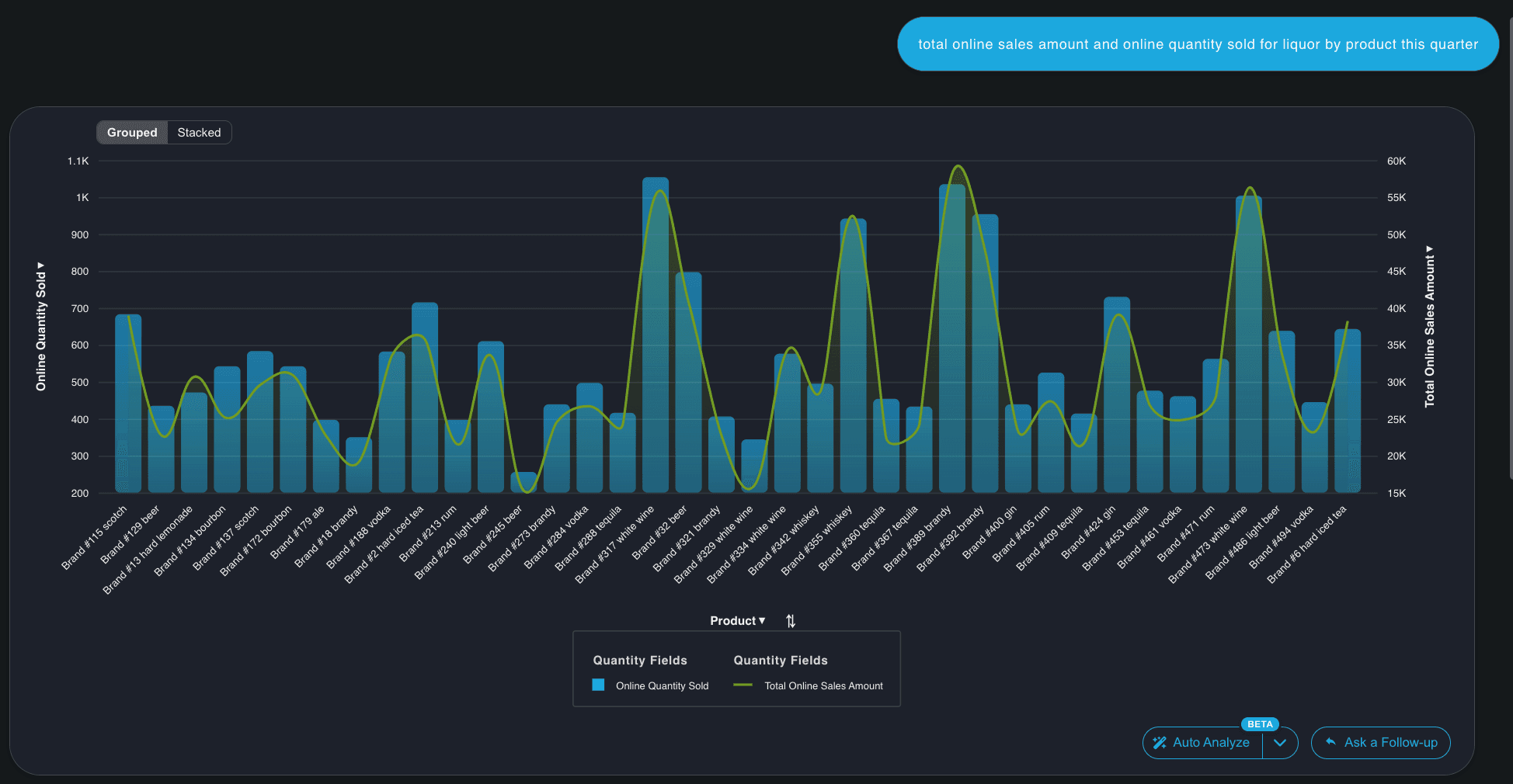
Enterprise analytics needs to fit an organization's existing security model. It shouldn't require creating exceptions just to run a query.
Evaluate:
Role-based access controls and dataset-level permissions
Multi-tenant isolation for organizations with multiple business units or clients
Audit logging and integration with existing systems
Compliance certifications
Cloud and on-premises deployment options
Data residency controls
Deployment flexibility matters more than most evaluations surface early. A cloud-only platform creates real constraints for organizations in regulated industries, those with existing on-premises infrastructure, or those with specific data residency requirements. The question worth asking is whether the platform supports deployment in the environment that fits your organization.
How Chata.ai handles this: Chata.ai is SOC 2 Type II and ISO 27001 certified. It supports cloud, VPC, and on-premises deployment, with role-based access controls, multi-tenant isolation, and audit logging built in. Organizations in regulated industries can deploy in the environment that fits their security model, rather than adapting their security model to fit the tool. Chata.ai trains on your schema structure, not your data. It generates a database query. Your database returns the answer. Chata.ai trains on table names, columns, and relationships. It learns the structure. It never sees the content in your rows.
8. How Quickly Can You Deliver Value?
According to Gartner, data readiness is a top barrier to AI, driving over 75% of organizations to prioritize AI-ready data investments. The best analytics platform isn't the one with the longest feature list. It's the one you can connect, govern, deploy, and expand without creating another major data engineering project.
Implementation timelines vary widely. Some platforms require months of data modeling work before a single business user can ask a question.
Things worth checking:
Realistic implementation timeline
What integration work is required on your side
Support for data modeling
How easily the platform expands to new data sources or new departments
Deployment options
How Chata.ai handles this: Chata.ai connects directly to existing data sources without requiring data migration, pipeline rebuilds, or a separate data layer. There's no need to move, copy, or transform data before the platform can work — it queries what you already have. That removes the most time-consuming part of most analytics implementations and means business users can start getting answers sooner rather than waiting for an infrastructure project to finish first.
What Should an Enterprise-Ready Self-Service Analytics Platform Deliver?
The evaluation checklist
Capability | What to evaluate |
Data privacy | How are sensitive values protected during AI processing? |
Natural-language analytics | Can users complete meaningful analytical workflows without SQL? |
Answer transparency | Can users understand where answers come from and how they were produced? |
Proactive analytics | Can the platform identify and surface important changes automatically? |
Costs & Scalability | How do performance and cost change as usage grows? |
Adoption | Can business users get value without extensive training? |
Enterprise security | Does it meet your organization's security, governance, and deployment requirements? |
Implementation | How quickly can the platform deliver value and expand across the organization? |
Bring the eight criteria together and a clear picture emerges. Sensitive data should stay protected throughout the workflow. Users should be able to ask, explore, visualize, and follow up without touching SQL. They should be able to see where an answer comes from. Important changes should reach the right people automatically, not just sit in a dashboard waiting to be noticed. Performance and cost should stay predictable as usage grows. Business users should get value with minimal training. It should fit your existing security and deployment model.
How Chata.ai Fits This Model
Chata.ai brings these capabilities together in a self-service analytics platform built to work with your existing data rather than replace it. It applies a privacy layer that obfuscates sensitive data before AI processing rather than treating privacy as an afterthought, gives business users natural-language access to analytics, and keeps the path from question to answer transparent and auditable.
On the proactive side, any natural-language question can become an ongoing alert, so teams can monitor the metrics that matter without waiting on someone to build a dashboard for them. Most of the processing runs on standard CPU infrastructure rather than requiring GPU-backed compute, which keeps costs more predictable as usage scales. Deployment options span cloud, VPC, and on-premises, backed by ISO 27001 and SOC 2 Type II certification, multi-tenant isolation, and audit controls, so it can sit inside the security model you already have rather than asking you to build a new one.
What to Look for, in Short
The best self-service analytics platform isn't the one with the most features on the page. It's the one that lets your organization make analytics genuinely self-service without giving up privacy, trust, security, usability, or predictable economics along the way.
Have questions about evaluating self-service analytics for your organization? Book a demo with Chata.ai and our experts will help you map these criteria to your specific data environment and team.
Topics
Help teams explore data without compromising privacy.
Self-Service Analytics Platform: 8 Questions to Ask Before Buying
Published
5 min read
Topics:
Self-Service Analytics
Table of Contents
Sit through enough vendor demos for self-service analytics platforms and you'll notice they all promise the same things: ask questions in plain language, build dashboards in minutes, use AI to do the heavy lifting, and free your business users from waiting on an analyst.
The differences show up later, after the contract is signed and the platform meets your actual data.
Does the tool work across the systems you already run, or does it need everything piped into one place first? When someone gets a number back, can they tell where it came from? Does it fit the way your security team already thinks about data? What happens to your bill once a few thousand people start asking it questions every day?
This article walks through eight things worth checking before you choose a self-service analytics platform.
TL;DR: The best self-service analytics platforms do more than let business users ask questions in plain language. They make analytics genuinely accessible while keeping answers trustworthy, protecting sensitive data, surfacing insights before anyone asks, controlling cost as usage grows, and meeting enterprise security requirements. Before you buy, evaluate natural-language analytics, answer transparency, data privacy, auditability, scalability and total cost of ownership, adoption, enterprise security, and implementation.
1. Does the self-service platform protect sensitive data during processing?
Some platforms send raw data values to external language model APIs as part of interpreting a natural-language query, passing actual customer records, financial figures, or other sensitive fields to a third-party service just to figure out what the user is asking. That creates real exposure: the data leaves your governed environment; it may be logged or retained by the external provider, and it's subject to that provider's own security and data-handling practices rather than yours. For regulated industries or anything covered by data residency requirements, that alone can rule a platform out, regardless of how good its natural-language capabilities are otherwise.
Before you buy, understand exactly what happens to sensitive information once it enters the analytics pipeline, and what safeguards are actually in place. Self-service analytics platforms shouldn't require organizations to expose sensitive business information unnecessarily just to let employees ask questions in plain language.
Things worth checking:
Does the AI need to see sensitive field values in order to interpret a question?
Is sensitive data masked before it reaches any external model?
What data, if any, leaves the organization's environment during a query?
Where does the actual query processing happen?
How Chata.ai handles this: Chata.ai includes a proprietary privacy obfuscation layer that masks sensitive data values before they reach any language model. Query processing happens locally, not through an external AI service. Organizations in regulated industries can run natural-language analytics without exposing sensitive business data to third-party infrastructure.
2. Can Users Trust Where Answers Come From?
Enterprise analytics needs more than an answer. Users need enough context to understand what that answer represents, where the data came from, and how the result was produced. When a dashboard shows an unexpected number, the first question in any organization is "is this right?" A platform that can't answer that question efficiently creates more distrust than it removes.
Look for transparency across the full path from question to result:
Is the generated query visible and reviewable?
Is there an audit trail showing who asked what and when?
One practical way to evaluate this is to ask the vendor exactly what happens between a user's question and the final number on screen. Some platforms use a single model to go directly from natural language to a database query, with no visibility into intermediate steps. Others break the pipeline into distinct stages, each of which can be inspected.
That distinction matters most when a result looks wrong and someone needs to find out why. An auditable pipeline, where every transformation step is visible, is a meaningful difference from a system where the answer arrives but the path to it is opaque.
How Chata.ai handles this: Chata.ai uses a pipeline with distinct, inspectable stages. We built our technology in a way where it never queries your database directly. Instead, your request is understood, turned into a query, and processed within your environment. Every step is visible, so when a result looks off, there's a clear path to finding out why.
Enterprises evaluating analytics platforms should ask whether users can see the generated query, trace results to their source data, and inspect the logic used to produce an answer. Platforms with auditable, step-by-step pipelines give teams the ability to verify results rather than simply accept them. This becomes especially important in regulated industries where data traceability is a compliance requirement, not a preference.
3. Does the Platform Support Natural Language Analytics Beyond Simple Queries?
The presence of natural-language querying and its actual depth are two very different things. Most implementations handle only a narrow slice of the analytical workflow. A useful platform should let business users ask questions, explore naturally, ask follow-ups, generate visualizations, and combine both: conversational language and results you can trust.
The question worth asking isn't "does it support natural language?" it's "how much of the analytical workflow can a business user complete through natural language?". A platform that handles the first question well but pushes users back to IT for anything complex isn't genuinely self-service. The goal is a complete analytical workflow.
Evaluate whether the platform handles:
Query suggestions that help users discover what they can ask
Chart and dashboard generation from natural-language requests
Follow-up questions with context
Filtering and exploring results
Complex questions gracefully rather than failing silently
How Chata.ai handles this: Chata.ai supports a full conversational workflow — follow-up questions, visualization generation, query suggestions, and result exploration, all in plain language. Business users can move from question to chart to follow-up without switching interfaces or involving a technical team.
4. Is the Self-Service Platform Cost-Efficient and Scalable?
A platform that performs well for 20 users can behave very differently with thousands of users and millions of queries per month. Performance and economics need to be evaluated together, not separately.
On economics, the more important questions are:
What infrastructure does the platform require, and does that scale proportionally with usage?
What are the expected total costs at 10,000, 100,000, and 1 million queries per month?
AI inference infrastructure deserves specific attention. Platforms that route every query through large external language model APIs accumulate significant costs as usage grows.
How Chata.ai handles this: Chata.ai's engine runs predominantly on standard central processing units (CPU) infrastructure, which keeps computing costs low even as usage grows. By executing on CPU, the platform reduces infrastructure costs and lowers the barriers to scaling enterprise data operations. That means enhanced ROI as you scale your data monetization projects, without sacrificing performance.
5. Can the Platform Move From Reactive to Proactive?
Most analytics platforms are reactive by design. A user opens a dashboard, checks a number, notices something looks off, and starts investigating. That workflow depends entirely on someone knowing to look. What happens to the KPI that moves overnight when nobody has the dashboard open?
More capable platforms can monitor important metrics continuously and surface relevant changes to users before they ask.
Evaluate whether a platform can:
Let business users configure their own monitoring conditions in natural language
Monitor defined KPIs and thresholds automatically
Deliver context, not just a raw number
Reactive self-service | Proactive self-service |
User opens dashboard | Platform monitors KPIs continuously |
User notices a change | Platform detects the change |
User investigates manually | Platform provides context with the alert |
User shares the finding | The right person receives the insight |
Action starts after discovery | Action starts immediately |
The operational gap between reactive and proactive analytics grows significantly as data volume and team size increase.
The distinction matters most in high-stakes environments where the delay between a signal and a response has real business consequences. By handling the ongoing process of data monitoring and identifying changes, the self-service analytics platform reduces the need for users to constantly sift through data themselves. This allows teams to spend less time searching for signals and more time on higher-value work, improving productivity across the organization.
How Chata.ai handles this: Any natural-language query in Chata.ai can become a monitored alert that delivers automated insights. Business users set their own thresholds and conditions in plain language, no SQL, no admin involvement required. Notifications are delivered through the channels teams already use, so the right person gets the right signal without waiting to look.
6. Will Business Users Actually Use the Platform?
The return on an analytics platform depends almost entirely on whether people use it without needing training sessions, analyst support, or a workaround for every second question. A platform that IT loves but business users quietly avoid hasn't solved the adoption problem.
Evaluate adoption factors before deployment:
How many steps does it take for a business user to go from question to answer to action?
Are scheduled reports and alerts accessible to non-admin users?
Does the platform surface insights in the channels teams already use day to day?
A practical benchmark is time to first meaningful answer. If a new user can get a relevant, accurate response to a real business question within minutes of first use, adoption tends to stick. If it takes hours of onboarding before anyone gets value, it usually doesn't.
For analytics leaders trying to reduce the volume of ad hoc requests landing on their team, that time-to-first-answer benchmark matters more than any feature comparison.
How Chata.ai handles this: Business users can ask questions, set alerts, and share results from the same interface. Time to first meaningful answer is measured in minutes, not hours of onboarding.
7. Does It Meet Your Enterprise Security and Governance Requirements?
Enterprise analytics needs to fit an organization's existing security model. It shouldn't require creating exceptions just to run a query.
Evaluate:
Role-based access controls and dataset-level permissions
Multi-tenant isolation for organizations with multiple business units or clients
Audit logging and integration with existing systems
Compliance certifications
Cloud and on-premises deployment options
Data residency controls
Deployment flexibility matters more than most evaluations surface early. A cloud-only platform creates real constraints for organizations in regulated industries, those with existing on-premises infrastructure, or those with specific data residency requirements. The question worth asking is whether the platform supports deployment in the environment that fits your organization.
How Chata.ai handles this: Chata.ai is SOC 2 Type II and ISO 27001 certified. It supports cloud, VPC, and on-premises deployment, with role-based access controls, multi-tenant isolation, and audit logging built in. Organizations in regulated industries can deploy in the environment that fits their security model, rather than adapting their security model to fit the tool. Chata.ai trains on your schema structure, not your data. It generates a database query. Your database returns the answer. Chata.ai trains on table names, columns, and relationships. It learns the structure. It never sees the content in your rows.
8. How Quickly Can You Deliver Value?
According to Gartner, data readiness is a top barrier to AI, driving over 75% of organizations to prioritize AI-ready data investments. The best analytics platform isn't the one with the longest feature list. It's the one you can connect, govern, deploy, and expand without creating another major data engineering project.
Implementation timelines vary widely. Some platforms require months of data modeling work before a single business user can ask a question.
Things worth checking:
Realistic implementation timeline
What integration work is required on your side
Support for data modeling
How easily the platform expands to new data sources or new departments
Deployment options
How Chata.ai handles this: Chata.ai connects directly to existing data sources without requiring data migration, pipeline rebuilds, or a separate data layer. There's no need to move, copy, or transform data before the platform can work — it queries what you already have. That removes the most time-consuming part of most analytics implementations and means business users can start getting answers sooner rather than waiting for an infrastructure project to finish first.
What Should an Enterprise-Ready Self-Service Analytics Platform Deliver?
The evaluation checklist
Capability | What to evaluate |
Data privacy | How are sensitive values protected during AI processing? |
Natural-language analytics | Can users complete meaningful analytical workflows without SQL? |
Answer transparency | Can users understand where answers come from and how they were produced? |
Proactive analytics | Can the platform identify and surface important changes automatically? |
Costs & Scalability | How do performance and cost change as usage grows? |
Adoption | Can business users get value without extensive training? |
Enterprise security | Does it meet your organization's security, governance, and deployment requirements? |
Implementation | How quickly can the platform deliver value and expand across the organization? |
Bring the eight criteria together and a clear picture emerges. Sensitive data should stay protected throughout the workflow. Users should be able to ask, explore, visualize, and follow up without touching SQL. They should be able to see where an answer comes from. Important changes should reach the right people automatically, not just sit in a dashboard waiting to be noticed. Performance and cost should stay predictable as usage grows. Business users should get value with minimal training. It should fit your existing security and deployment model.
How Chata.ai Fits This Model
Chata.ai brings these capabilities together in a self-service analytics platform built to work with your existing data rather than replace it. It applies a privacy layer that obfuscates sensitive data before AI processing rather than treating privacy as an afterthought, gives business users natural-language access to analytics, and keeps the path from question to answer transparent and auditable.
On the proactive side, any natural-language question can become an ongoing alert, so teams can monitor the metrics that matter without waiting on someone to build a dashboard for them. Most of the processing runs on standard CPU infrastructure rather than requiring GPU-backed compute, which keeps costs more predictable as usage scales. Deployment options span cloud, VPC, and on-premises, backed by ISO 27001 and SOC 2 Type II certification, multi-tenant isolation, and audit controls, so it can sit inside the security model you already have rather than asking you to build a new one.
What to Look for, in Short
The best self-service analytics platform isn't the one with the most features on the page. It's the one that lets your organization make analytics genuinely self-service without giving up privacy, trust, security, usability, or predictable economics along the way.
Have questions about evaluating self-service analytics for your organization? Book a demo with Chata.ai and our experts will help you map these criteria to your specific data environment and team.
More Updates